From Bloomberg News
Man Demands More Jail Time to Honor Hero Larry Bird
Oct. 20 (Bloomberg) -- A 27-year-old man demanded extra prison time because he wanted to honor his basketball hero, Larry Bird. A lawyer for Eric James Torpy reached a plea agreement with Oklahoma City prosecutors for a 30-year jail term on two charges of shooting with intent to kill and one count of a violation, District Court Judge Ray Elliott said in a telephone interview. Torpy then insisted on getting 33 years to match the uniform number Bird wore when he led the Boston Celtics to three National Basketball Association Championships during the 1980s, Elliott said. The judge on Oct. 18 accommodated his guest.
``He told his attorney that Larry Bird was his long-time hero, and that if he was going to go to prison he wanted to go down with that number,'' Elliott said. Under Oklahoma law, prisoners must serve 85 percent of their sentence before being eligible for parole, Elliott said. Torpy understood that and told his lawyer that it didn't matter, the judge said. ``In 26 years, I've never seen an individual request more time,'' Elliott said. ``They're generally begging and pleading for less time. But he was as happy as he could be.''
Bird, a three-time NBA Most Valuable Player who is now an executive with the Indiana Pacers, didn't immediately return a message left at his office. ``Maybe Bird will autograph a jersey for him,'' Elliott said.
Thursday, October 20, 2005

In Praise of Superfly
It's hard not to love a mother who is known to all of my friends as "Superfly."
One of the most amusing things about Superfly is her use of bizarre Upstate New York (she grew up in Rochester) pronunciations and usages. She's lived in New York City since the Eisenhower administration, but she still pronounces "bagel" as "BAG-ul."
Similarly, the "stereo" is the "STEER-e-o."
Then there are the odd formulations of common phrases. It's the end of October, so "Trick or treat" season is upon us...except in upstate New York, where it is, apparently, "Trick 'n' treat." Now, that doesn't really make sense does it? Those poor Rochester people paying out thousands of dollars in candy each year and STILL getting their houses egged and toilet papered.
Finally, there is no article in "the Internet" for her. It's just "Internet," which always makes it sound more like the computer network that takes over the world in the Terminator movies.
All of this is tremendously endearing and, well, she's my Mom.
But lately I've been thinking about her a lot for an unusual reason. I've been thinking about how I want my guitar to sound on both the classical side, where I am in the market for a high-quality concert guitar, and on the Microdot side, where we are working on new sounds for the band.
And what I find is that I am trying to make the instrument sound like my mom's voice.
You see, Superfly is former opera singer. Here she is performing in Mexico

Her clear, rounded, pitch-perfect voice is the soundtrack to my entire youth. She taught singing in our apartment when I was growing up, so I would get home and listen to her and her students all afternoon as I pretended to to my homework.
Turns out it is extraordinarily hard to make your guitar sound that clear and precise and, at the same time, so warm and full. But it is so much a part of me that I can't help but keep working for that goal. I search for that sound, both in the instrument and in myself.
And someday, when she is gone, that voice that I heard my whole life will, hopefully, live on through me.
One of the most amusing things about Superfly is her use of bizarre Upstate New York (she grew up in Rochester) pronunciations and usages. She's lived in New York City since the Eisenhower administration, but she still pronounces "bagel" as "BAG-ul."
Similarly, the "stereo" is the "STEER-e-o."
Then there are the odd formulations of common phrases. It's the end of October, so "Trick or treat" season is upon us...except in upstate New York, where it is, apparently, "Trick 'n' treat." Now, that doesn't really make sense does it? Those poor Rochester people paying out thousands of dollars in candy each year and STILL getting their houses egged and toilet papered.
Finally, there is no article in "the Internet" for her. It's just "Internet," which always makes it sound more like the computer network that takes over the world in the Terminator movies.
All of this is tremendously endearing and, well, she's my Mom.
But lately I've been thinking about her a lot for an unusual reason. I've been thinking about how I want my guitar to sound on both the classical side, where I am in the market for a high-quality concert guitar, and on the Microdot side, where we are working on new sounds for the band.
And what I find is that I am trying to make the instrument sound like my mom's voice.
You see, Superfly is former opera singer. Here she is performing in Mexico
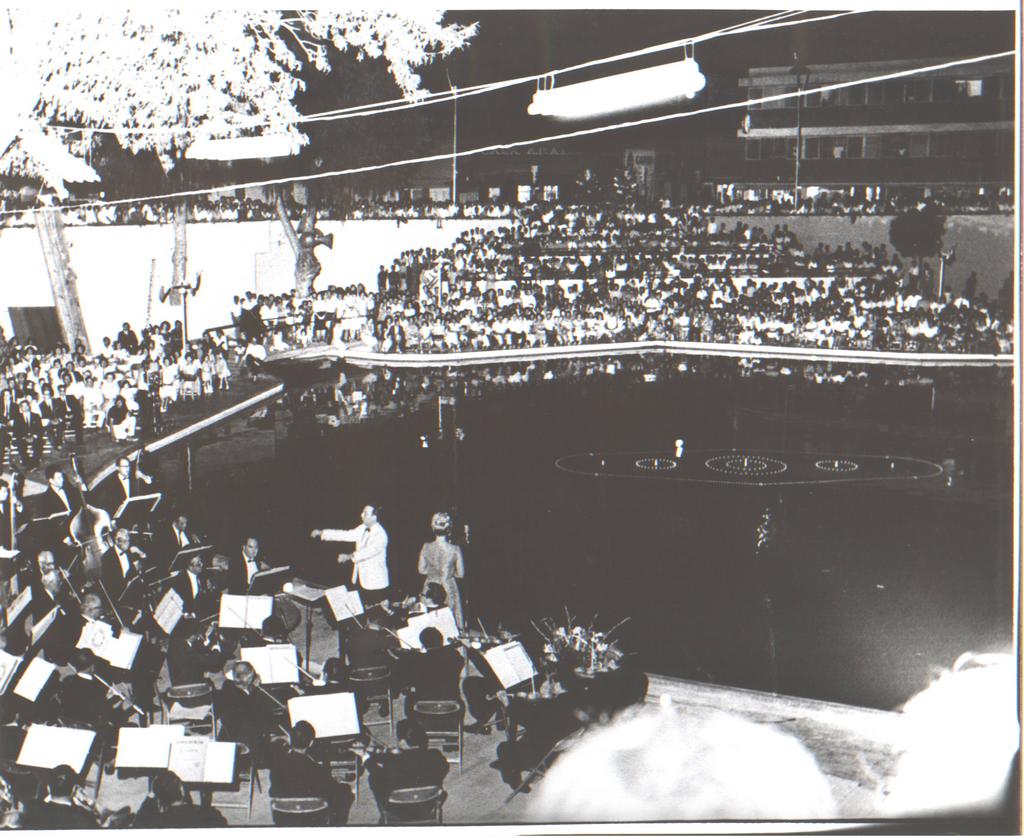
And in Tosca:

Her clear, rounded, pitch-perfect voice is the soundtrack to my entire youth. She taught singing in our apartment when I was growing up, so I would get home and listen to her and her students all afternoon as I pretended to to my homework.
Turns out it is extraordinarily hard to make your guitar sound that clear and precise and, at the same time, so warm and full. But it is so much a part of me that I can't help but keep working for that goal. I search for that sound, both in the instrument and in myself.
And someday, when she is gone, that voice that I heard my whole life will, hopefully, live on through me.
Lady Strange
A couple of days ago I downloaded Def Leppard's High 'n' Dry, a record I haven't heard since I owned it on vinyl in the early 1980s.
The Leppard went on to major heights of suckitude with their later work, but at this stage they were still an interesting young pop-metal band, stationed at the crossroads between the heavy blues of AC/DC and the more straightforward metal sound of an Iron Maiden (although never even close to that hard). Unfortunately, they got involved with "Mutt" Lange and I suspect he is the reason they ended up writing horrific songs like "Pour Some Sugar on Me."
I also wonder how much of the change in the band's direction was the result of the departure of Pete Willis.
So how does the record hold up after 20 years without listening to it?
The first side is pretty darned good. Let It Go, Another Hit and Run and High 'n' Dry are solid songs. The latter two have an interesting blend of straight up blues-rock riffs from the AC/DC playbook and more interesting harmonic ideas. It's that second part that saves them from being just a poor man's AC/DC and it is what makes their first hit, Bringin' on the Heartbreak better than your average power ballad. My favorite part of the record is the instrumental, Switch 625, that follows.
Side two, on the other hand, is not so hot. One definitely gets the feeling that they were running out of material. Some people seem to think Lady Strange is a great song, but it doesn't do much for me. One bummer on the iTunes version of the record is that you don't get the infinite repeat of "No no no" on the runout groove from the vinyl version. Then again, I rarely listened all the way through, so maybe that's not that big a deal.
Still, that first side shows a band that might have grown into something pretty good, once they grew up a little.
Oh well. If I am writing about Def Leppard, I clearly have little to say today.
Monday, October 17, 2005
Chewie Get Us Out Of Here!!

Chewbacca is becoming an American citizen.
I wasn't so crazy about this comment:
"I am feeling very happy about it," Mayhew said. "Whatever people say about America, it is still one of the most wonderful countries in the world, despite the politics, religion and everything else that goes on."
Yeah, well, just remember that it is those crazy Christians who keep things like this from happening:

Rocket to the Crypt
Charles Rocket has apparently killed himself.
Although I was mighty young at the time, I remember the big brouhaha when he managed to curse on live TV. Twenty five years later, it seems almost quaint that there could be such an uproar.
Charles, we hardly knew ye.
No, I mean it. I really have no idea what you did after that season. Rest in peace.
Although I was mighty young at the time, I remember the big brouhaha when he managed to curse on live TV. Twenty five years later, it seems almost quaint that there could be such an uproar.
Charles, we hardly knew ye.
No, I mean it. I really have no idea what you did after that season. Rest in peace.
I Am in Flavor Country
Zero Tolerance
It drives me batty to read, yet again, about a private plane entering restricted airspace.
Simply put, there is no excuse for a private pilot to venture unwittingly into a no-fly zone in this country. Long before September 11, the Federal Aviation Regulations required all pilots to be fully briefed about all aspects of their flight before departing. Obtaining information about airspace restrictions has become absurdly easy with the growth of the Internet. Even without a computer, all a pilot has to do is call the local Flight Service Station and ask for a standard briefing on the route of flight. The information is not hidden in some obscure vault.
Some pilots will bitch and moan that the changing restrictions are confusing and subject to change, but I can't agree. The information is available (from a live human being if you call the FSS!) and it is the responsibility of the pilot to know it. If you are unsure, you can even call the FSS on the radio when you are in the air.
These high-profile incursions come at a time when the Aircraft Owners and Pilots Association is lobbying to have the Washington D.C. Air Defense Identification Zone ("ADIZ") reduced or amended. It's becoming an uphill battle. How can the AOPA argue for a loosening of the airspace when general aviation pilots keep proving that they can't even follow the current regs? It's maddening and it adds momentum to the push to create a New York ADIZ, which would suck royally. I can say that dealing with the Newark and LaGuardia towers has been fairly easy and pleasant for me thus far. Creating an ADIZ would turn the whole situation into a huge mess.
I haven't been very misanthropic lately, but this news definitely brings it all back.
Simply put, there is no excuse for a private pilot to venture unwittingly into a no-fly zone in this country. Long before September 11, the Federal Aviation Regulations required all pilots to be fully briefed about all aspects of their flight before departing. Obtaining information about airspace restrictions has become absurdly easy with the growth of the Internet. Even without a computer, all a pilot has to do is call the local Flight Service Station and ask for a standard briefing on the route of flight. The information is not hidden in some obscure vault.
Some pilots will bitch and moan that the changing restrictions are confusing and subject to change, but I can't agree. The information is available (from a live human being if you call the FSS!) and it is the responsibility of the pilot to know it. If you are unsure, you can even call the FSS on the radio when you are in the air.
These high-profile incursions come at a time when the Aircraft Owners and Pilots Association is lobbying to have the Washington D.C. Air Defense Identification Zone ("ADIZ") reduced or amended. It's becoming an uphill battle. How can the AOPA argue for a loosening of the airspace when general aviation pilots keep proving that they can't even follow the current regs? It's maddening and it adds momentum to the push to create a New York ADIZ, which would suck royally. I can say that dealing with the Newark and LaGuardia towers has been fairly easy and pleasant for me thus far. Creating an ADIZ would turn the whole situation into a huge mess.
I haven't been very misanthropic lately, but this news definitely brings it all back.
Shooting Fish in a Barrel
It's just too easy to come up with cracks about Ted Kennedy's brave, er, "rescue" over the weekend, but old Ted's been pretty much a joke since Day One, so I will refrain.
Sunday, October 16, 2005
The Windy City
After enduring over a week of rain and clouds, I was excited to drive out to Linden Airport today and go flying in my 1969 Cessna 182M. I got my pilot's license on June 21 and have logged about 131 hours total with about 69 hours as Pilot in Command.
The winds this morning were about 12 knots, gusting to 17 knots. This is pretty windy, but not entirely crazy. Not having flown in two weeks, I was anxious to get back in the plane and continue accumulating cross country flight time so that I can obtain my instrument rating (I need 50 hours of solo x-country before I can get the rating). So I planned a flight from Linden to Ocean City, Maryland. By 10:30, I was just about to head out the door.
In the back of my mind, however, was a small voice. It was a voice advising me to re-check the weather and re-think the trip. I went back to the computer and checked the latest weather at Newark (which is ony 6 miles north of Linden). The winds had increased to 19 knots, with gusts up to 25 knots. There was a high wind warning in effect. Now we were into territory where I would be increasing my risks substantially. I was no longer comfortable.
So I stayed home. And that, in a nutshell, is how pilots live to old age. The go/no-go decision is often very tough and there was certainly no legal reason I could not have made the flight. But there was also no real reason to make the flight in these conditions. The potential crosswind component could have been close the maximum for my plane, let alone my abilities. The danger of gusts over 5 knots, even if they are right down the runway, is the potential for an inadvertent stall on final.
When I tell friends that I am a pilot, the majority are freaked out at the possibility that the engine would fail in flight. But a plane without an engine is just a glider. Part of the training for the Private Pilot's License is performing an emergency landing with no engine. It's a serious situation to be sure, but one which can be controlled reasonably well.
What really kills pilots is weather. There is no reason to fly knowingly into weather conditions that are at the edge of one's abilities, at least not without an instructor. Every month I get a newsletter that tracks general aviation accidents and the story, over and over and over, is pilots dying because they took off into conditions for which they were not prepared.
I hope that little voice never goes away.
The winds this morning were about 12 knots, gusting to 17 knots. This is pretty windy, but not entirely crazy. Not having flown in two weeks, I was anxious to get back in the plane and continue accumulating cross country flight time so that I can obtain my instrument rating (I need 50 hours of solo x-country before I can get the rating). So I planned a flight from Linden to Ocean City, Maryland. By 10:30, I was just about to head out the door.
In the back of my mind, however, was a small voice. It was a voice advising me to re-check the weather and re-think the trip. I went back to the computer and checked the latest weather at Newark (which is ony 6 miles north of Linden). The winds had increased to 19 knots, with gusts up to 25 knots. There was a high wind warning in effect. Now we were into territory where I would be increasing my risks substantially. I was no longer comfortable.
So I stayed home. And that, in a nutshell, is how pilots live to old age. The go/no-go decision is often very tough and there was certainly no legal reason I could not have made the flight. But there was also no real reason to make the flight in these conditions. The potential crosswind component could have been close the maximum for my plane, let alone my abilities. The danger of gusts over 5 knots, even if they are right down the runway, is the potential for an inadvertent stall on final.
When I tell friends that I am a pilot, the majority are freaked out at the possibility that the engine would fail in flight. But a plane without an engine is just a glider. Part of the training for the Private Pilot's License is performing an emergency landing with no engine. It's a serious situation to be sure, but one which can be controlled reasonably well.
What really kills pilots is weather. There is no reason to fly knowingly into weather conditions that are at the edge of one's abilities, at least not without an instructor. Every month I get a newsletter that tracks general aviation accidents and the story, over and over and over, is pilots dying because they took off into conditions for which they were not prepared.
I hope that little voice never goes away.
Saturday, October 15, 2005
Always Already
Every week I still go to see Yasha, the man who taught me how to play classical guitar years ago. Studying with Yasha was one of the best decisions of my life. He gave me a solid foundation in technique, but he also saw that I would be bored with many of the student pieces, so he got me started very early on concert repertoire and used difficult passages in those pieces as ways to develop my skills. When I got to college and studied in the music department, my teachers were amazed at what a solid base I had in technique, even though I had only been studying for about three years. I've got Yasha to thank for that.
Still, the guitar department was afflicted with a severe inferiority complex in relation to the other, more famous concert instruments like piano, violin, etc. The head of the department, who is, honestly, a pretty cheesy player, was obsessed with the idea that the guitarists studying in the department didn't have the same basic skills as, say, a beginner pianist.
Now, this was probably true to a certain extent. Piano and violin, for example, are extremely competitive instruments and the students who studied in the music department were clearly motivated, well-trained players. There was only one other undergraduate in the program with me (the rest were graduate students) and she was a little lacking in basic skills.
Unfortunately, the curriculum was so focused on developing rest stroke scales, free stroke scales, arpeggios, tremolo work, rasgueado, and anything else under the sun, that I felt like I spent most of my time cranking through exercises and not playing pieces. I am not going to suggest that it didn't help develop some skills, but, as I later found out, it exacted a toll on my playing.
I eventually reconnected with Yasha a few years back and he was distressed to hear my playing. It sounded mechanical, tense and overpowered with a harsh tone. For the last few years, we have worked to retain the technique, but get rid of those less appealing qualities.
And what is so strange about that journey is that I play less and less guitar each week, but I seem to make more and more progress creating a beautiful tone, creating phrasing for the pieces and adding a pulse to keep the playing alive. I often play very little in our lessons. Sometimes I just listen to Yasha play. Sometimes we just talk.
One thing that Yasha said early on has stuck with me. To play the pieces beautifully, we must become the kind of guitarist who plays the piece beautifully. This is not achieved through hours of practice and technical exercise. This is achieved by allowing yourself to fall in love with the piece. To sing it, sometimes literally. But, most importantly, it is achieved by changing who you are inside.
And that is something they can't teach you in college.
Still, the guitar department was afflicted with a severe inferiority complex in relation to the other, more famous concert instruments like piano, violin, etc. The head of the department, who is, honestly, a pretty cheesy player, was obsessed with the idea that the guitarists studying in the department didn't have the same basic skills as, say, a beginner pianist.
Now, this was probably true to a certain extent. Piano and violin, for example, are extremely competitive instruments and the students who studied in the music department were clearly motivated, well-trained players. There was only one other undergraduate in the program with me (the rest were graduate students) and she was a little lacking in basic skills.
Unfortunately, the curriculum was so focused on developing rest stroke scales, free stroke scales, arpeggios, tremolo work, rasgueado, and anything else under the sun, that I felt like I spent most of my time cranking through exercises and not playing pieces. I am not going to suggest that it didn't help develop some skills, but, as I later found out, it exacted a toll on my playing.
I eventually reconnected with Yasha a few years back and he was distressed to hear my playing. It sounded mechanical, tense and overpowered with a harsh tone. For the last few years, we have worked to retain the technique, but get rid of those less appealing qualities.
And what is so strange about that journey is that I play less and less guitar each week, but I seem to make more and more progress creating a beautiful tone, creating phrasing for the pieces and adding a pulse to keep the playing alive. I often play very little in our lessons. Sometimes I just listen to Yasha play. Sometimes we just talk.
One thing that Yasha said early on has stuck with me. To play the pieces beautifully, we must become the kind of guitarist who plays the piece beautifully. This is not achieved through hours of practice and technical exercise. This is achieved by allowing yourself to fall in love with the piece. To sing it, sometimes literally. But, most importantly, it is achieved by changing who you are inside.
And that is something they can't teach you in college.
A Petit Orn
Spent the day trying to organize my apartment a little. To pass the time while I assembled some new bookshelves, I listened to Ornette Coleman's 1977 album Dancing in Your Head.
Coleman once said, "I could play and sound like Charlie Parker note-for-note, but I was only playing it from method. So I tried to figure out where to go from there." Where he went was what is commonly termed "free jazz" and Dancing in Your Head is a great big, crazy slab of it. The first two cuts are basically Coleman and guitarists Charles Ellerbee and Bern Nix improvising on a theme in Bb. Coleman had become interested in Moroccan music, as evidenced by the track "Midnight Sun," which featured Coleman in a free-form jam with music critic Rober Palmer and the Master Musicians of Jajouka.
I find myself alternately exhilarated and exasperated by this music. There is a clear joyfulness in the sound and there are moments of fascinating interplay between the musicians. The exposition of the theme, which is pretty simplistic, is a crazy eruption that doesn't sound at all like what we normally hear as jazz.
But there is also a sense that, quite frankly, this is bullshit.
The music is, by design, organized chaos and I find myself wondering if there is a point at which we've left music of enduring interest and just going to a bunch of highly-trained musicians goofing around. Coleman's solos are so out there, so nonsensical, so uninterested in being anything, that I must confess I lose interest and start to feel like we've just ventured into pure randomness. And if we get to pure randomness, do we even need a bunch of guys with stellar jazz chops anymore? What then, is the difference between "Theme from a Symphony (Variation 1)" and, say, "The Waiting Room," off The Lamb Lies Down on Broadway by Genesis? Let's face it, critics were not hailing Steve Hackett and Tony Banks as geniuses for that track.
So I guess this is a confession for me. Maybe I am a Philistine, but I can't help but feel that this is something other than music. I feel happy, but conned.
Coleman once said, "I could play and sound like Charlie Parker note-for-note, but I was only playing it from method. So I tried to figure out where to go from there." Where he went was what is commonly termed "free jazz" and Dancing in Your Head is a great big, crazy slab of it. The first two cuts are basically Coleman and guitarists Charles Ellerbee and Bern Nix improvising on a theme in Bb. Coleman had become interested in Moroccan music, as evidenced by the track "Midnight Sun," which featured Coleman in a free-form jam with music critic Rober Palmer and the Master Musicians of Jajouka.
I find myself alternately exhilarated and exasperated by this music. There is a clear joyfulness in the sound and there are moments of fascinating interplay between the musicians. The exposition of the theme, which is pretty simplistic, is a crazy eruption that doesn't sound at all like what we normally hear as jazz.
But there is also a sense that, quite frankly, this is bullshit.
The music is, by design, organized chaos and I find myself wondering if there is a point at which we've left music of enduring interest and just going to a bunch of highly-trained musicians goofing around. Coleman's solos are so out there, so nonsensical, so uninterested in being anything, that I must confess I lose interest and start to feel like we've just ventured into pure randomness. And if we get to pure randomness, do we even need a bunch of guys with stellar jazz chops anymore? What then, is the difference between "Theme from a Symphony (Variation 1)" and, say, "The Waiting Room," off The Lamb Lies Down on Broadway by Genesis? Let's face it, critics were not hailing Steve Hackett and Tony Banks as geniuses for that track.
So I guess this is a confession for me. Maybe I am a Philistine, but I can't help but feel that this is something other than music. I feel happy, but conned.
Friday, October 14, 2005
Step by Step
I've been reading The Great Influenza by John M. Barry, which seems topical enough. I got it on Tuesday when I was sitting in Logan Airport waiting for a shuttle back to New York. The book is not quite what I expected it to be, but it has been a fascinating read. The first 1/3 of the text is given over to a brief history of the transformation of American medicine in the 50 or so years from the founding of Johns Hopkins to the end of the great influenza pandemic of 1918. It was amazing to realize how close we were to leeches and bloodlettings at the turn of the century.
Now, I haven't finished the book yet, but the structure Barry has chosen for his narrative is somewhat similar to the movie "Outbreak," starring Dustin Hoffman. An epidemic starts and brave doctors are rushing to identify the pathogen and create a cure. In the movie, the plot centers around finding the monkey who infected everybody. Once they find him, they are able to whip up a cure in no time and save everybody.
As I said, I haven't finished the book, but I am pretty certain that the 1918 pandemic simply burned out, as viruses do, because they tend to run out of hosts or mutate into less lethal forms (a process known as "passage"). There was no monkey to find and no cure to whip up.
On the other hand, the intensive study prompted by the pandemic undoubtedly moved virology, pathology, epidemiology and other branches of medicine forward.
So what's my point?
In my daily life, I run a fund that invests in biotechnology companies. When I tell that to people, they often assume that one of the companies we invest in will someday come out and announce that they have "cured" cancer/diabetes/muscular dystrophy/ALS. Being a non-scientific type, I realize now that I used to think that way, subconsciously, as well. It's human nature.
But it doesn't really happen. "Positive" results in many cancer trials increase life expectancy by mere months. The ball is advanced slowly. Medicine is kind of like Army football; the passing game is weak. We advance one yard at a time, on the ground, in the mud.
Now, I haven't finished the book yet, but the structure Barry has chosen for his narrative is somewhat similar to the movie "Outbreak," starring Dustin Hoffman. An epidemic starts and brave doctors are rushing to identify the pathogen and create a cure. In the movie, the plot centers around finding the monkey who infected everybody. Once they find him, they are able to whip up a cure in no time and save everybody.
As I said, I haven't finished the book, but I am pretty certain that the 1918 pandemic simply burned out, as viruses do, because they tend to run out of hosts or mutate into less lethal forms (a process known as "passage"). There was no monkey to find and no cure to whip up.
On the other hand, the intensive study prompted by the pandemic undoubtedly moved virology, pathology, epidemiology and other branches of medicine forward.
So what's my point?
In my daily life, I run a fund that invests in biotechnology companies. When I tell that to people, they often assume that one of the companies we invest in will someday come out and announce that they have "cured" cancer/diabetes/muscular dystrophy/ALS. Being a non-scientific type, I realize now that I used to think that way, subconsciously, as well. It's human nature.
But it doesn't really happen. "Positive" results in many cancer trials increase life expectancy by mere months. The ball is advanced slowly. Medicine is kind of like Army football; the passing game is weak. We advance one yard at a time, on the ground, in the mud.
Thursday, October 13, 2005
Ha Ha Mr. Heath
Ted -
I am sorry that I have not been better about reading your blog.
I want a Tedstock t-shirt. I want a copy of the CD and I want to see the film.
Then I want to dilute the brand by putting Tedstock on everything in sight, including condoms.
But it all started with Ted.
I am sorry that I have not been better about reading your blog.
I want a Tedstock t-shirt. I want a copy of the CD and I want to see the film.
Then I want to dilute the brand by putting Tedstock on everything in sight, including condoms.
But it all started with Ted.
Ironic, Referential Title
Unamusing personal anecdote unamusing personal anecdote unamusing personal anecdote unamusing personal anecdote unamusing personal anecdote. Marginally clever turn of phrase marginally clever turn of phrase marginally clever turn of phrase marginally clever turn of phrase. Continued exposition continued exposition continued exposition continued exposition continued exposition.
Navel-staring observations navel-staring observations navel-staring observations navel-staring observations. Reference to un-famous friend reference to un-famous friend reference to un-famous friend.
Notice of misanthropy notice of misanthropy notice of misanthropy notice of misanthropy. Desire to kill desire to kill desire to kill desire to kill desire to kill.
Punchline punchline punchline punchline.
Navel-staring observations navel-staring observations navel-staring observations navel-staring observations. Reference to un-famous friend reference to un-famous friend reference to un-famous friend.
Notice of misanthropy notice of misanthropy notice of misanthropy notice of misanthropy. Desire to kill desire to kill desire to kill desire to kill desire to kill.
Punchline punchline punchline punchline.
Wednesday, October 12, 2005
Duck March
It seemed like there would be a lot to hate about humanity on a day like today (and getting around the city was not all that fun), but it wasn't that bad in the end. The day culminated in a writing session with Mike at the studio and we popped out a few new ideas that made me remarkably happy. It was a relief to remember that Mike and I are good at churning out ideas for new material; I had been concerned that we had been stagnant on that front. We got right back to work, however, and produced a few "Aha!" moments that got the ball rolling.
Alternate side of the street parking is suspended tomorrow and I will be spending the day at home.
Sometimes it feels like God packed my picinic basket.
Alternate side of the street parking is suspended tomorrow and I will be spending the day at home.
Sometimes it feels like God packed my picinic basket.
Tuesday, October 11, 2005
The Pause That Refreshes
Today I had a particularly hellish commute to Boston on the U.S. Air Shuttle. Our flight was supposed to take off at 8:00 A.M., but a combination of weather/equipment/sunspots/the Elders of Zion kept us on the tarmac for an annoying 2 hours. The halcyon days of good free magazines on the Boston-New York-DC shuttle are long gone, so I was stuck without anything to read as I listened to the minutes click out of my life. With nothing else to do, I started watching the guy in the seat next to me as he struggled with the USA Today crossword puzzle. That was my big mistake. As it turns out, the only thing more annoying than sitting on an airplane with nothing to do is watching the guy next to you miss easy clues in the McNewspaper crossword.
After forty minutes of this, I was on the verge of screaming, "5 ACROSS IS 'DOTS!' D-O-T-S!! DO YOU HEAR ME??? DOTS!!!" The clue was "Ellipsis' three."
When I boarded the plane, I noticed that there was a First Class section, which seems to be a bit of a waste on a one hour and four minute flight. Now I realize that First Class is there so you don't have to watch steam come out of your neighbor's ears as he wrestles with the USA Today crossword puzzle. Nobody in First would miss "Ellipsis' three."
5 down was "Daphne," by the way.
After forty minutes of this, I was on the verge of screaming, "5 ACROSS IS 'DOTS!' D-O-T-S!! DO YOU HEAR ME??? DOTS!!!" The clue was "Ellipsis' three."
When I boarded the plane, I noticed that there was a First Class section, which seems to be a bit of a waste on a one hour and four minute flight. Now I realize that First Class is there so you don't have to watch steam come out of your neighbor's ears as he wrestles with the USA Today crossword puzzle. Nobody in First would miss "Ellipsis' three."
5 down was "Daphne," by the way.
Monday, October 10, 2005
To Everything (Turn, Turn, Turn)
As I was driving to work this morning, I was trying to pass a silver Toyota. Unfortunately, the Toyota kept swerving into the passing lane, but only enough to block my progress. After flashing my lights and honking, I was able to pass.
When I looked over to give the obligatory dirty look, I saw that the driver was furiously digging his right index finger into his left nostril. Yes, the reason this guy was nearly flinging his car across three lanes of traffic was to dislodge snot.
The End Times are truly upon us.
When I looked over to give the obligatory dirty look, I saw that the driver was furiously digging his right index finger into his left nostril. Yes, the reason this guy was nearly flinging his car across three lanes of traffic was to dislodge snot.
The End Times are truly upon us.
People Are Idiots
I was trying to park on Jane Street the other day when I noticed that the 8 year old boy standing in the spot wasn't moving. I rolled down my window and told him to watch out because I was backing into the space. He then proceeded to pull the most annoying move in New York City parking; he told me he was "holding" the space for his mother.
The desire to floor the accelerator and mow this young lad down in broad daylight passed quickly enough, but I was annoyed. I was even more shocked when he called his 3 year old sister across the street to stand in the spot next to him.
People are idiots. I am filled with hatred.
The desire to floor the accelerator and mow this young lad down in broad daylight passed quickly enough, but I was annoyed. I was even more shocked when he called his 3 year old sister across the street to stand in the spot next to him.
People are idiots. I am filled with hatred.
Subscribe to:
Posts (Atom)